Commercial Outdoor Shades Northwest Arkansas | Restaurant & Brewery
Northwest Arkansas restaurants and breweries need commercial outdoor shades that handle intense summer heat while matching the region's upscale aesthetic. Here's your complete guide.
Your patio sits empty at 2 PM on a July Saturday. Inside, guests wait 45 minutes for a table while your outdoor square footage bakes under relentless Ozark sunshine. This scenario repeats across Northwest Arkansas every summer—from the craft cocktail spots near Bentonville’s 8th Street Market to the bustling brewpubs in the Fayetteville Entertainment District. The solution isn’t complicated, but it requires precision: commercial outdoor shades engineered for your specific building, your specific climate challenges, and your specific guest expectations.
The Northwest Arkansas restaurant and brewery scene has exploded. According to the Northwest Arkansas Council’s 2023 economic report, the region added over 180 new food and beverage establishments between 2020 and 2023 (Source: Northwest Arkansas Council Economic Impact Study, 2023). Yet most of these businesses operate with zero dedicated shade infrastructure—losing revenue every time temperatures climb above 85°F or afternoon storms roll through the Boston Mountains.
Why NWA’s Climate Demands Purpose-Built Commercial Shades
Northwest Arkansas isn’t Phoenix, and it isn’t Seattle. Your shade solution must handle a uniquely volatile climate profile that swings from humid 95°F summers to 40°F shoulder-season evenings when guests still want to dine outdoors. The average high temperature in Fayetteville during July reaches 89.4°F with humidity levels routinely exceeding 70% (Source: National Weather Service, Tulsa Office, 2023). That combination creates a heat index that pushes perceived temperatures well above 100°F during peak dining hours.
Summer Heat Load Challenges
Direct solar exposure on unshaded patios generates surface temperatures 30-50°F higher than ambient air temperature (Source: U.S. Environmental Protection Agency, Reducing Urban Heat Islands Compendium, 2022). For your guests seated at metal tables in Downtown Rogers, that means touching surfaces hot enough to cause discomfort—or worse, burns on a child’s arm. Commercial-grade shade fabrics with UV block ratings above 95% reduce surface temperatures by an average of 20°F, according to the Professional Awning Manufacturers Association testing protocols (Source: PAMA Technical Bulletin 2022-03).
Shoulder Season Extension
The real revenue opportunity lies in extending your patio season beyond the traditional May-September window. Retractable shade systems with integrated heating compatibility allow you to operate comfortably through October and into early November. Ozarks Electric Commercial rate structures reward businesses that can shift peak energy consumption—and operating your patio with radiant heaters under a properly insulated shade canopy costs significantly less than heating an expanded interior footprint.
Storm and Wind Protection
Afternoon thunderstorms arrive fast in the Ozarks. Your shade system needs wind-load engineering rated for gusts exceeding 60 mph—the threshold for severe thunderstorm warnings that occur an average of 42 times annually in Washington and Benton counties (Source: NOAA Storm Events Database, Arkansas Region, 2019-2023). Motorized retractable systems with anemometer sensors automatically retract when wind speeds become dangerous, protecting your investment while eliminating the need for staff to manually secure shades during service.
Matching Shade Solutions to NWA’s Architectural Landscape
The commercial building stock across Northwest Arkansas spans three distinct categories, each demanding different shade approaches. A cookie-cutter solution designed for strip-mall construction won’t integrate properly with the industrial-modern aesthetic that defines the 8th Street Market area, and vice versa.
Mixed-Use Downtown Developments
The Bentonville 8th Street Market area exemplifies the region’s most sophisticated commercial architecture: exposed steel beams, glass curtain walls, and carefully curated sight lines. Your shade installation here must complement—not compete with—the architectural intent. Tension-cable shade sails in neutral grays or blacks integrate seamlessly with industrial design vocabulary while providing the UV protection your guests demand.
Mounting considerations in these developments often require structural engineering review. The mixed-use buildings along 8th Street typically feature post-tensioned concrete decks that prohibit conventional anchor drilling. Freestanding cantilevered shade structures with weighted bases or bolt-down plates to existing structural elements solve this challenge without compromising building integrity.
Converted Warehouse Spaces
Fossil Cove Brewing and Bike Rack Brewing represent the adaptive-reuse aesthetic that defines much of Fayetteville’s craft beverage scene. These converted industrial spaces often feature outdoor areas with inconsistent roof lines, exposed brick, and limited mounting surfaces. Retractable pergola systems with extruded aluminum frames provide the structural independence these buildings require while delivering the refined appearance your guests expect.
New Commercial Construction
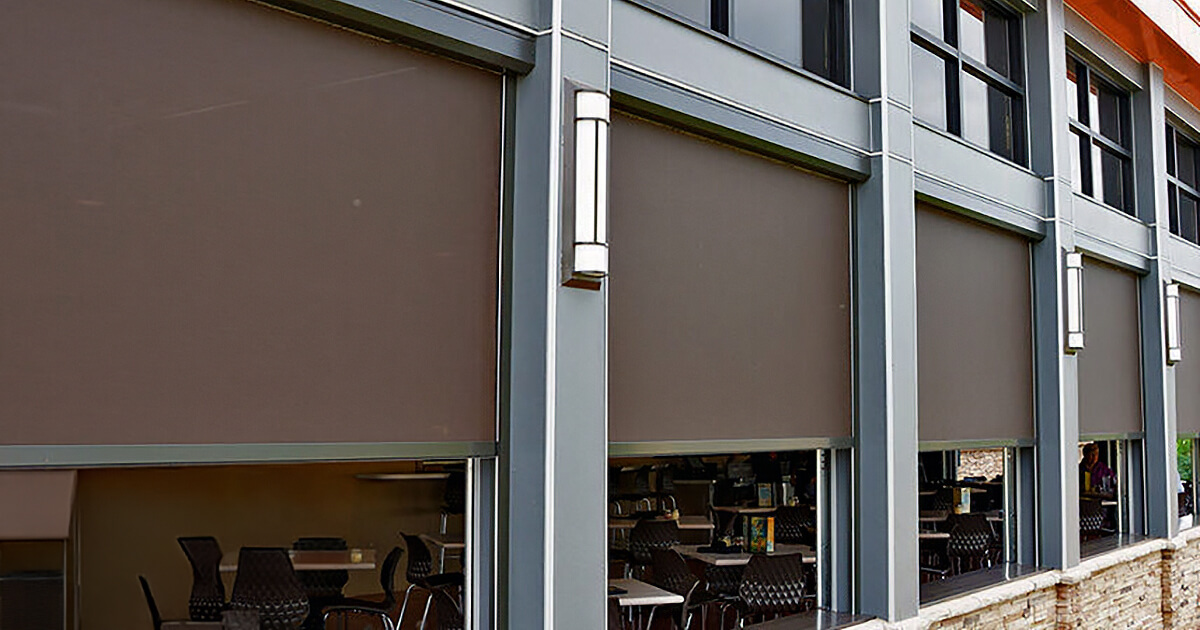
Ground-up restaurant and brewery construction in the Fayetteville Entertainment District and expanding areas of Rogers offers the luxury of designing shade into the building from day one. If you’re in the planning phase, specifying integrated motorized louvered roof systems eliminates the retrofit complications that plague older buildings. These systems close completely during rain, open fully for starlight dining, and adjust to any angle in between.
Commercial Shade System Options Compared
Selecting the right system requires balancing your aesthetic vision, operational requirements, and budget. The following comparison addresses the four primary categories deployed across Northwest Arkansas commercial installations:
| System Type | UV Block Rating | Wind Rating | Price Range (per sq ft) | Best Application |
|---|---|---|---|---|
| Tension Shade Sails | 90-98% | Up to 75 mph | $15-$35 | Modern architectural integration |
| Retractable Awnings | 95-100% | Up to 65 mph | $25-$55 | Building-mounted patios |
| Louvered Pergolas | 100% (closed) | Up to 110 mph | $45-$85 | Year-round operation |
| Fixed Canopy Structures | 95-100% | Engineered to site | $35-$65 | Permanent installations |
The National Restaurant Association’s 2023 State of the Industry report found that restaurants with covered outdoor seating generated 23% higher per-square-foot revenue than those with uncovered patios (Source: National Restaurant Association, 2023 State of the Restaurant Industry Report). That margin more than justifies the investment in a properly engineered system.
Installation Considerations for NWA Businesses
Your commercial shade installation involves stakeholders beyond your own four walls. Understanding the permitting landscape and utility coordination requirements in Northwest Arkansas prevents costly delays.
Permitting and Code Compliance
Bentonville, Fayetteville, and Rogers each maintain separate commercial building permit processes. Shade structures exceeding 120 square feet typically require building permits and may trigger site plan review, particularly within downtown overlay districts. The Fayetteville Entertainment District carries additional design review requirements through the city’s Urban Development Committee. Budget four to eight weeks for permit processing on structures requiring engineering stamps.
Electrical and Utility Coordination
Motorized shade systems require dedicated 120V or 240V circuits depending on motor specifications. If your building operates at or near its electrical service capacity—common in older Downtown Rogers commercial spaces—you may need to coordinate a service upgrade with your commercial utility provider. Integrating shade motor controls with your existing building automation or point-of-sale triggered systems requires advance planning with your electrical contractor.
Structural Load Analysis
Building-mounted retractable awnings transfer significant wind and dead loads to your exterior walls. A licensed structural engineer must verify that your wall assembly, connections, and foundation can accept these loads without modification. For converted warehouse buildings with unreinforced masonry walls, this analysis often reveals the need for supplemental steel framing—an expense that’s far better discovered during planning than during installation.
“The difference between a shade project that enhances your brand and one that becomes a maintenance headache comes down to one thing: whether your installer understood commercial applications from day one. Residential shade companies cutting their teeth on your brewery is a recipe for callbacks, warranty disputes, and disappointed guests.”
Maximizing Your ROI: Operational Best Practices
Installing commercial outdoor shades represents the beginning, not the end, of your patio optimization journey. These operational practices ensure you capture the full revenue potential of your investment:
- Train staff on system operation—motorized shades retracted during ideal weather waste their potential; extended during dangerous winds, they become liability
- Integrate with reservation systems—when guests book patio seating, they’re booking an experience; ensure your host team confirms shade availability
- Schedule seasonal maintenance—fabric tension, motor function, and frame integrity require annual inspection before peak season
- Document warranty terms—commercial fabric warranties typically range from 5-10 years; motor warranties vary from 3-7 years depending on manufacturer
The most successful Northwest Arkansas hospitality operators treat their outdoor spaces as revenue-generating assets requiring the same attention as their kitchens or bar programs. Your shade infrastructure anchors that outdoor experience.
Why Northwest Arkansas Hospitality Operators Trust Specialized Installers
The craft brewery and restaurant boom across Northwest Arkansas has outpaced the availability of commercial shade expertise. Many businesses have learned expensive lessons attempting to adapt residential-grade products to commercial applications.
Consider what separates commercial-grade installations:
- Engineering documentation—commercial projects require stamped drawings for permit approval and liability protection
- Commercial fabric specifications—materials rated for minimum 5-year UV stability and flame resistance per NFPA 701
- Motor duty ratings—commercial motors designed for 15+ daily cycles versus residential units rated for 3-5
- Warranty backing—manufacturer support for commercial applications with documented installation by certified contractors
- ADA compliance verification—ensuring shade structures don’t create accessibility barriers
Operators near the 8th Street Market, throughout Downtown Rogers, and across the Fayetteville Entertainment District who invest in properly specified and installed shade systems report patio utilization increases of 35-50% during peak summer months. That translates directly to covers served, beverages poured, and revenue captured.
Ready to transform your outdoor space into a year-round revenue generator? Request a commercial outdoor shade consultation for your NWA business today. Our team will conduct an on-site assessment of your building, your operational requirements, and your aesthetic vision—then deliver a detailed proposal engineered specifically for your location. Schedule your free consultation now and join the Northwest Arkansas hospitality operators who’ve turned their patios into competitive advantages.
Frequently Asked Questions
What wind speed rating should commercial outdoor shades have for Northwest Arkansas?
Given the frequency of severe thunderstorms in the Ozarks region, your commercial shade system should carry a minimum wind rating of 65 mph for retractable systems with automatic wind sensors, or 75+ mph for fixed tension structures. Louvered pergola systems engineered for permanent installation often achieve ratings exceeding 100 mph, making them suitable for year-round deployment without manual intervention during storm events.
How long does commercial shade installation typically take for a restaurant patio?
Most commercial shade installations in Northwest Arkansas require 2-5 days of on-site work following permit approval and material delivery. However, the total project timeline—including site assessment, engineering review, permit processing, and manufacturing lead times—typically spans 8-14 weeks from initial consultation to completed installation. Projects requiring structural modifications or utility upgrades may extend this timeline by an additional 2-4 weeks.
Can commercial outdoor shades be integrated with existing building automation systems?
Yes, modern commercial shade motors accept integration with BACnet, Modbus, and relay-based building automation protocols. This allows your shade system to respond automatically to occupancy sensors, scheduled events, weather station inputs, or even point-of-sale triggers that activate shades when patio tables are seated. Integration typically requires coordination between your shade installer and building automation contractor during the specification phase.
What maintenance do commercial shade systems require in Arkansas's climate?
Commercial shade systems in Northwest Arkansas benefit from biannual maintenance: a spring inspection before peak season and a fall service before winter storage or reduced use. Maintenance includes fabric tension adjustment, motor lubrication and function testing, frame connection torque verification, and cleaning to remove pollen, mold, and debris accumulation common in the humid Ozarks climate. Budget approximately $200-$500 annually per system for professional maintenance visits.